Proudly serving Phoenix, Scottsdale, Mesa, Glendale, Chandler, Gilbert & surrounding areasCall or Text 24/7: 602-464-4613
Aerial drone view of a residential neighborhood with Saguaro cacti and mountain silhouettes in Phoenix, AZ.

Picture Window Installation and Large-Pane Replacement in Phoenix, AZ

Phoenix Window Co. installs and repairs picture windows for homes and businesses in Phoenix, Arizona. We also provide energy-efficient window replacement, custom windows, vinyl and aluminum frames, residential glass replacement, and commercial storefront glass. Projects range from a single cracked pane to a whole-home upgrade. Fixed picture windows can stand alone for a wide view or pair with sliding, casement, or awning windows for ventilation.

Phoenix summers put glass, seals, and frames under severe stress, and many Arcadia, Ahwatukee, and Maryvale homes still have original single-pane aluminum windows that were not designed for 110-degree afternoons. Large west- and south-facing picture windows need the right glass package to limit solar heat gain and UV fading. Our installers select dual-pane or triple-pane insulated glass, Low-E coatings, argon fill, and orientation-specific solar heat gain performance. Exact measurement and complete perimeter sealing help control drafts, early seal failure, and monsoon-season water intrusion.

Glass packages are specified against the ENERGY STAR-recommended U-factor of 0.4 or lower for the Phoenix and Tucson valleys, while frame choices account for heat conduction and desert UV exposure. Phoenix Window Co. is licensed through the Arizona Registrar of Contractors, coordinates permits through the City of Phoenix Planning and Development Department, and installs to current International Residential Code requirements.

Phoenix Window Co. provides picture-window installation and repair in Phoenix and across Scottsdale, Tempe, Mesa, Chandler, and Glendale.

★ ★ ★ ★ ★4.9/5.0 Customer Rating · 21 Years of Window Experience · Thousands of Windows Installed · Licensed, Bonded & Insured · Serving Homes & Businesses

Picture Window Options & Benefits

What Are Picture Windows?

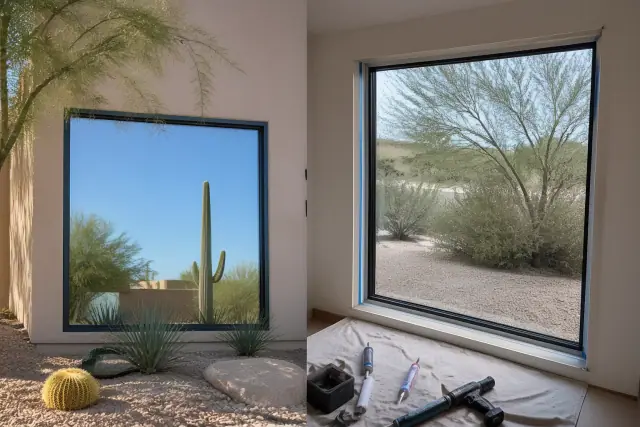
A picture window is a fixed window that does not open, leaving no sash or grid line to interrupt views of South Mountain, backyard pools, or desert landscaping. Its non-operable design also creates fewer air-leak paths than a comparable opening window.

That tighter seal matters in the Salt River Valley, where air conditioning may run eight to nine months a year. A picture window can form the center of a combination unit, with casement or sliding windows on either side to provide ventilation.

Because fixed glass provides no ventilation or secondary bedroom exit, size and placement must be planned around room use and code requirements. West-facing expanses also need Low-E coating and argon-filled insulated glass to keep the view from becoming a major source of solar heat gain.

Benefits of Picture Windows

Picture windows combine broad natural light with a clean architectural focal point. The strongest results come from matching the opening, exposure, glass package, and surrounding operable windows to the room.

  • Uninterrupted views without an operable sash across the glass
  • A tighter fixed seal with fewer moving air-leak points
  • Low-E glass that reflects infrared heat toward the exterior
  • Argon-filled insulated panes that reduce conductive heat transfer
  • Solar heat gain performance selected for each wall orientation
  • Perimeter weatherstripping and caulking that limit drafts
  • Exact custom sizing for odd shapes and out-of-square openings
  • Combination layouts that add casement or sliding ventilation
Phoenix Window Services

Picture Window & Replacement Services

Our residential and commercial work covers fixed picture windows, full window replacement, custom openings, frame upgrades, glass repair, and storefront applications. Each service is matched to the existing opening, sun exposure, ventilation needs, and condition of the frame.

Picture Window Installation

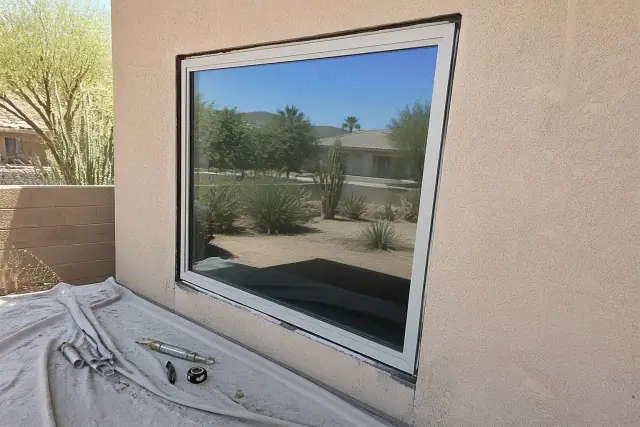
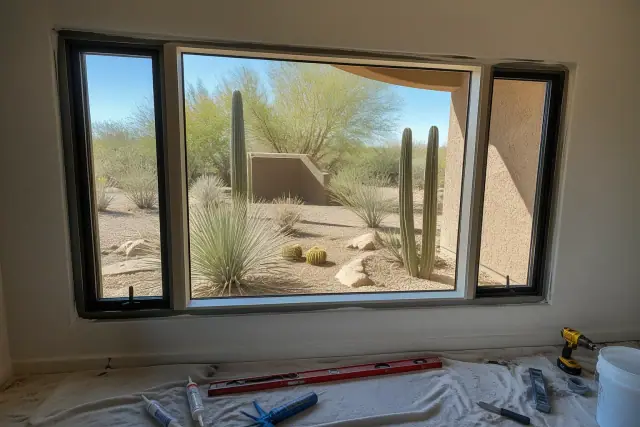
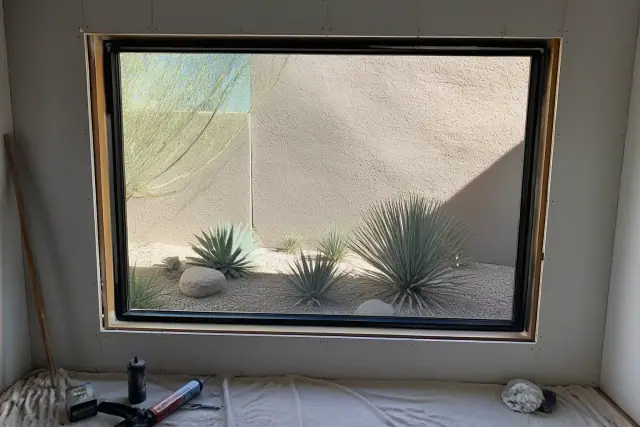
A picture window frame being installed in a wall in Phoenix, AZ, with tools and materials on a drop cloth.

We install fixed picture windows as stand-alone features or as the center of a combination assembly. Each unit is dry-fitted, shimmed level and plumb, mechanically fastened to manufacturer specifications, flashed, and sealed for desert UV and monsoon-driven rain.

Request Estimate

Energy-Efficient Window Replacement

Window replacement in progress on a stucco home in Phoenix, AZ, showing a new window frame, tools, and desert landscaping.

Whole-home upgrades replace heat-conducting single-pane aluminum units with insulated glass and frame packages selected for the building's exposures. Energy-efficient windows can return $300 to $600 in savings within the first year and $1,500 to $3,000 over five years, with benefits that can continue beyond the ten-year mark.

Request Estimate

Custom Window Design

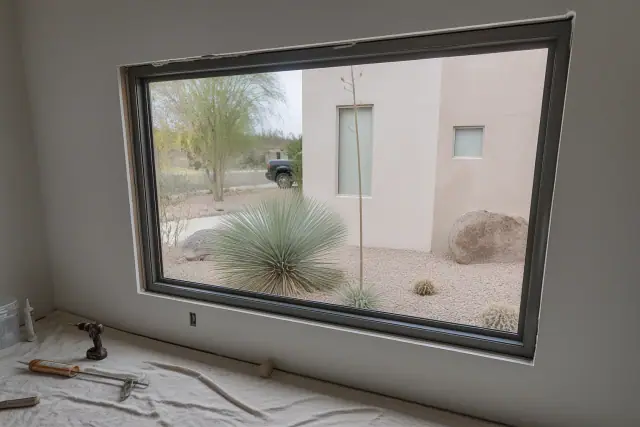
Custom window frame installation on a stucco home in Phoenix, AZ, with tools and materials on a drop cloth.

Custom projects begin with on-site measurements of rough openings and checks for out-of-square framing common in Phoenix's mid-century housing stock. We template odd shapes, oversized glass, and combination units, then coordinate sightlines, grid patterns, black or white frames, and interior trim details.

Request Estimate

Vinyl, Aluminum, and Wood Frames

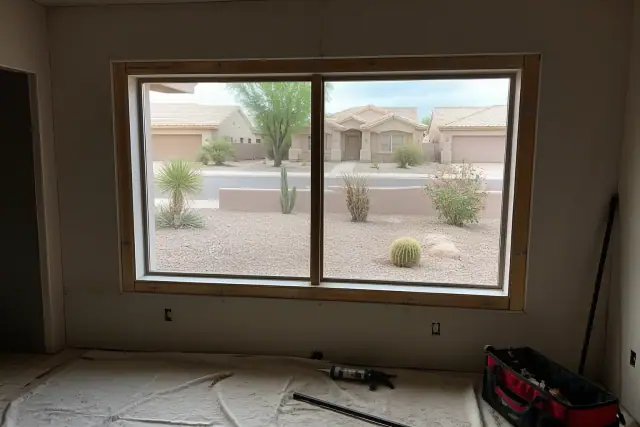
Vinyl, aluminum, and wood picture window frame installed in a wall during a home renovation in Phoenix, AZ.

Multi-chambered vinyl frames resist UV exposure, require no repainting, and insulate better than heat-conducting aluminum. Fusion-welded corners help quality vinyl remain stable as temperatures swing from freezing desert nights to 115-degree afternoons, while thermally broken aluminum and wood remain options for specific architectural needs.

Request Estimate

Window Repair and Glass Replacement

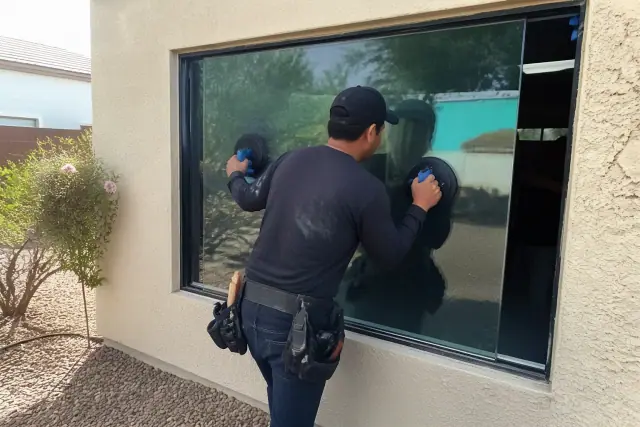
Technician installing a replacement glass insert into a residential window frame in Phoenix, AZ.

A cracked pane or failed insulated-glass seal can often be repaired when the surrounding frame remains sound. On original windows from homes built in the 1970s or 80s, chronic drafts, brittle vinyl, pitted aluminum, and recurring seal problems can make full replacement the more practical path.

Request Estimate

Commercial Window Solutions

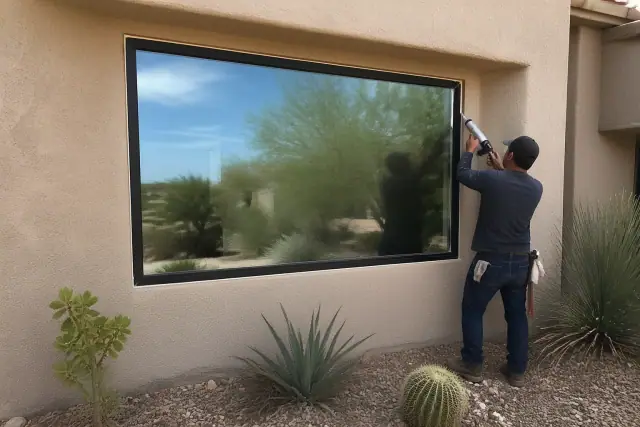
Contractor sealing a newly installed picture window with caulk on a stucco home in Phoenix, AZ.

Storefront and office projects use commercial-grade Low-E or tinted glass to control solar heat across large glazed areas while preserving visibility. We coordinate City of Phoenix permitting, International Building Code requirements, structural glazing details, safety glass, and hardware designed for higher traffic.

Request Estimate
Window Design Options

Window Styles & Glass Options

A fixed picture window can be combined with several operable styles, frame materials, and insulated-glass packages. The right mix depends on airflow, opening size, wall orientation, architectural character, maintenance preferences, and code requirements.

Window frame installation in progress with tools and desert landscaping visible in Phoenix, AZ.

Picture Window Combinations

Combination assemblies keep an expansive fixed center panel while adding operable windows where airflow is useful. They can be proportioned around a view, an oversized opening, or the trim lines already established in the room.

  • Fixed center glass for an uninterrupted focal view
  • Casement flankers that catch and direct passing breezes
  • Sliding flankers where outward clearance is limited
  • Custom grid patterns aligned with existing architecture
  • On-site templates for oversized or unusual shapes
Request Estimate
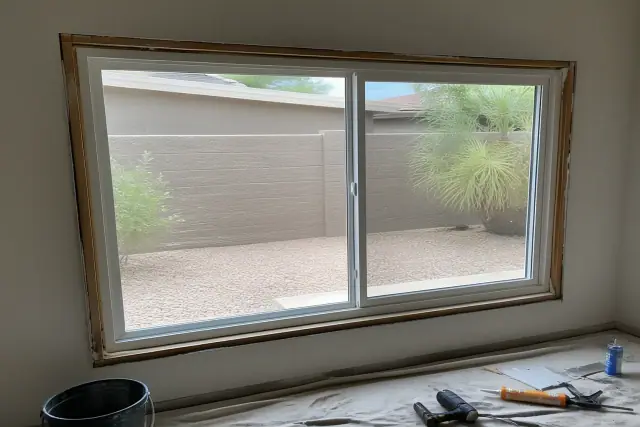
Sliding window frame installed in a residential wall opening at a job site in Phoenix, AZ.

Sliding Windows

Sliding windows move on a horizontal track, making them practical for bedrooms, laundry rooms, and spaces where an outward-swinging sash would conflict with furniture. Vinyl slider frames also avoid the pitting and corrosion that can affect poorly maintained aluminum tracks.

  • Horizontal operation without a crank or projecting sash
  • Dual-weatherstripped tracks for tighter closure
  • Secure cam latches for ground-floor applications
  • Track cleaning that removes fine dust and haboob grit
  • Roller lubrication for smoother long-term movement
Request Estimate
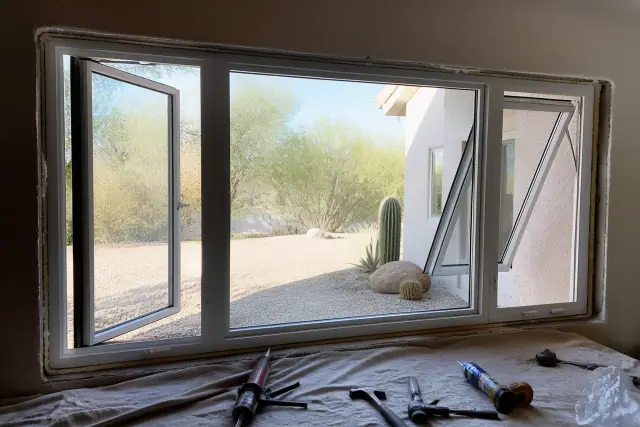
Casement and awning window installation in a stucco wall at a jobsite in Phoenix, AZ.

Casement and Awning Windows

Casement windows crank outward to catch a breeze, while awning windows hinge at the top to provide airflow above sinks or in bathrooms. An awning sash can remain useful during a light monsoon shower because its top-hinged form helps shed rain.

  • Wide casement openings that funnel outdoor air inside
  • Top-hinged awnings suited to kitchens and bathrooms
  • Multi-point locks that compress the sash against the frame
  • Compression seals that reduce air infiltration
  • Repairable crank operators and operating hardware
Request Estimate
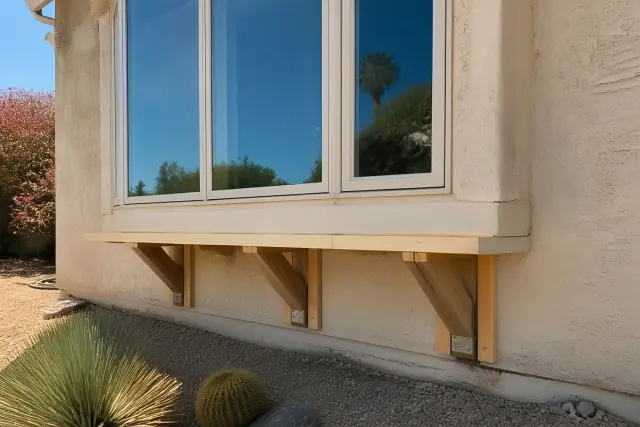
A contractor inspecting bay window support brackets on a stucco home in Phoenix, AZ.

Bay and Bow Windows

Bay and bow windows project beyond the wall plane and require proper structural support. Depending on the opening, installation may involve a supported header, knee wall, or cable system coordinated with City of Phoenix permitting requirements.

  • Projecting glass that adds depth to flat stucco walls
  • Interior space for a reading bench or plant shelf
  • Supported headers sized for the altered opening
  • Knee-wall or cable support where the load requires it
  • Permit coordination for building-envelope changes
Request Estimate
A window frame installed in a stucco wall with construction tools on a drop cloth at a residential site in Phoenix, AZ.

Glass and Frame Packages

Glass and frame specifications are selected together because both affect heat flow, UV exposure, durability, and appearance. Phoenix conditions often favor insulated glass and vinyl, but architectural priorities can call for aluminum, wood, specialty shapes, or commercial safety glazing.

  • Dual-pane and triple-pane insulated glass units
  • Low-E coatings that reflect infrared heat
  • Argon fill between sealed panes
  • Vinyl, thermally broken aluminum, or wood frames
  • Tempered or laminated safety glass where code requires it
Request Estimate
Finding the Right Fit

Choosing the Right Picture Window Approach

Selection starts with the opening rather than a stock size. We assess frame condition, glass type, wall orientation, ventilation, sightlines, and structural requirements, then measure and template the exact opening so the finished unit is not trimmed down from an ill-fitting standard window.

Exact-Opening Measurements

A site visit captures rough-opening dimensions, out-of-square framing, trim relationships, and combination-unit proportions. Building each custom order to the measured opening helps reduce perimeter gaps and long-term seal stress.

Phoenix Climate Specifications

We adjust Low-E performance and solar heat gain characteristics for east-, west-, south-, and shaded north-facing glass. Frame material, exterior sealant, and glass configuration are also selected for sustained UV exposure, thermal cycling, dust, and monsoon rain.

Permitting and Code Coordination

Phoenix Window Co. coordinates applicable permits through the City of Phoenix Planning and Development Department. Residential work follows current International Residential Code requirements, while commercial storefront work accounts for adopted International Building Code, impact, structural glazing, and safety-glass provisions.

What Sets Us Apart

Why Choose Us for Picture Window Installation?

Professional execution matters as much as the window itself. Our process removes the old unit to the framing, checks for water or termite damage, dry-fits the replacement, shims it level and plumb, fastens it to manufacturer specifications, and completes layered interior and exterior sealing rather than relying on foam alone.

Request Window Assessment

Excess Solar Heat Gain

Large uncoated fixed glass on a west- or south-facing wall can become a heat source and accelerate fading of flooring and furniture. Orientation-specific Low-E and insulated-glass specifications reduce incoming infrared heat while preserving natural light.

Failed Insulated-Glass Seals

Condensation trapped between panes usually indicates that the insulated-glass seal has failed. If the frame is still stable, replacing the sealed glass unit may restore clarity and thermal performance without replacing the entire window.

Drafts and Air Leakage

Gaps around an older frame, failed weatherstripping, and separated joints allow conditioned air to escape. Perimeter caulking, low-expansion foam, weather-resistant barrier tape, and a properly fitted frame address different parts of the leakage path.

Cracked or Damaged Glass

Hail and wind-blown debris during monsoon season can crack ordinary or tempered panes. Glass replacement is often appropriate when the damage is isolated and the sash or frame remains structurally sound.

Warped or Corroded Frames

Sun-baked low-grade vinyl can become brittle, while unmaintained aluminum can pit or conduct unwanted heat indoors. Frame condition, joint separation, and repeated operating problems help determine whether repair or full replacement is the better fit.

Improper Flashing and Water Intrusion

Missing sill-pan flashing, incomplete jamb or head tape, and incompatible exterior sealant can allow wind-driven rain into older stucco walls. Layered flashing and UV-rated sealant protect the opening before interior foam and finish caulk complete the installation.

How It Works

Our Picture Window Process

The installation sequence moves from assessment and product selection through exact measurement, permitting, removal, setting, and final sealing. Each step addresses the opening, exposure, structure, and finish details that determine long-term performance.

01.

On-Site Window Assessment

We inspect frame material, glass type, visible seal condition, wall orientation, room use, and the rough opening. This reveals air leakage, failed glass, out-of-square framing, and structural details before product choices are finalized.

02.

Design and Glass Selection

We review sightlines, grid patterns, ventilation, frame finish, and interior trim, then select dual-pane or triple-pane glass, Low-E coating, argon fill, and solar heat gain performance for the exposure.

03.

Exact Measurement and Permitting

Rough openings are measured on site, with templates created for odd shapes, oversized glass, and combination units. When the scope requires it, we coordinate permits through the City of Phoenix before installation begins.

04.

Removal and Opening Inspection

The old window is removed down to the framing so the opening can be checked for water damage, termite activity, and compromised materials common in older stucco construction. Any condition that affects the new unit is identified before setting it.

05.

Dry-Fit, Set, and Fasten

The replacement is dry-fitted, shimmed for level and plumb, and fastened according to the manufacturer specification. Mechanical attachment carries the window; foam is used for controlled air sealing, not as the sole support.

06.

Flash, Seal, and Finish

We flash the sill pan, tape the jambs and head, and apply compatible exterior sealant rated for Arizona UV and monsoon rain. Low-expansion foam and finish caulking complete the interior perimeter.

Plan Your Window Project

Schedule a Picture Window
Design
Consultation

Start with an in-home measurement and a review of the opening, exposure, glass package, frame material, and installation requirements. We provide an itemized estimate so you can see how size, materials, glazing, and structural work shape the project.

Picture Window Help

Picture Window FAQs

These answers cover picture-window design, Phoenix installation conditions, replacement costs, expected service life, repairs, and related window styles. For an opening-specific recommendation, begin with measurements and a condition assessment.

Call Our Window Team

Picture windows do not open, so they provide no ventilation and cannot serve as a secondary bedroom exit. They are often paired with casement or sliding windows, and west-facing installations need Low-E coating and argon-filled insulated glass to control solar heat gain.

Check Arizona Registrar of Contractors licensing, NFRC-rated product documentation, AAMA installation practices, and whether the company coordinates permits with the correct jurisdiction. Phoenix Window Co. is licensed through the Arizona Registrar of Contractors and coordinates applicable City of Phoenix permits.

Picture windows generally fall within the broader Phoenix replacement-window range of about $400 to $1,200 per window installed. Size, frame material, Low-E and argon-filled glass upgrades, and structural changes can move a large fixed unit toward the upper end.

Replacing six to eight windows generally totals $3,000 to $5,500. Full-home projects average around $8,700, with a broader range of roughly $4,100 to $18,500 depending on window count, frame material, glass package, and structural work.

Quality energy-efficient windows installed correctly can last 20 to 30 years under Arizona heat and UV exposure. Original aluminum single-pane units from homes built in the 1960s through 1980s may exceed 40 years of service, but often lose energy performance much earlier. Condensation between panes is a common sign that the glass seal has failed before the frame.

Age alone does not decide replacement. A window over 20 years old deserves an assessment when it has drafts, condensation between panes, deteriorated weatherstripping, frame damage, or rising summer cooling costs; a sound frame with an isolated glass problem may still be repairable.

Vinyl frames with dual-pane or triple-pane insulated glass, Low-E coating, and argon fill perform well against Phoenix heat. Thermally broken aluminum can serve architectural preferences, and the solar heat gain specification should be selected by wall orientation rather than applied uniformly to every opening.

The process starts at the property with rough-opening measurements and checks for out-of-square framing. Odd shapes, oversized openings, and combination units are templated on site so the order fits the actual opening instead of being cut down from a stock size.

A durable installation uses a flashed sill pan, weather-resistant barrier tape at the jambs and head, compatible exterior sealant, low-expansion interior foam, and finish caulk. The window must also be shimmed, mechanically fastened, and set level and plumb rather than held in place by foam alone.

Clear fine dust and haboob-driven grit from the tracks on a regular schedule, then lubricate the rollers with a product compatible with the window hardware. This helps preserve smooth travel and prevents abrasive debris from building up around weatherstripping and moving parts.

A single failed insulated-glass seal or cracked pane is often repairable when the surrounding frame remains sound. Full replacement becomes more practical when frame damage, chronic drafts, failed weatherstripping, or repeated seal problems affect the entire unit.

Because bay and bow windows project beyond the wall, they need a properly supported header and may require a knee wall or cable support system below. The design and permit review should account for the added load and the change to the building envelope.

Commercial storefronts and offices may use Low-E or tinted packages to reduce solar heat gain across large glazed areas. Tempered or laminated safety glass is specified where adopted International Building Code requirements call for impact, structural glazing, or ground-floor safety provisions.