Proudly serving Phoenix, Scottsdale, Mesa, Glendale, Chandler, Gilbert & surrounding areasCall or Text 24/7: 602-464-4613
Aerial drone view of a residential neighborhood with Saguaro cacti and mountain silhouettes in Phoenix, AZ.

Energy-Efficient Window Installation & Glass Replacement in Phoenix, AZ

Phoenix Window Co. installs energy-efficient windows for homes and businesses in Phoenix, Arizona. Our work includes vinyl and aluminum windows, custom windows, and double- or triple-pane glass packages. We also install sliding, casement, awning, picture, bay, and bow windows. Window repair, glass replacement, and commercial storefront glazing round out our Phoenix-area services.

Phoenix's hot-desert climate exposes aging single-pane and clear-glass aluminum windows to intense radiant heat. That heat gain can lengthen air-conditioning cycles from May through September. We match Low-E coatings, gas fills, U-factors, and Solar Heat Gain Coefficients to each home's orientation and exposure. Our licensed crews follow AAMA installation standards and City of Phoenix permit requirements for replacement and new-construction work.

Summer afternoons regularly push past 110 degrees, so the right glass package matters. Homeowners replacing single-pane or aging aluminum windows with Low-E, argon-filled dual-pane units typically see cooling-cost reductions in the 20-30% range, or roughly $250-$500 in annual savings depending on home size and orientation. We build each quote around ENERGY STAR-certified products and NFRC label data.

Phoenix Window Co. provides energy-efficient window service throughout Phoenix and the surrounding metro area, including Scottsdale, Tempe, Mesa, Glendale, and Chandler.

★ ★ ★ ★ ★4.9/5.0 Customer Rating · 21 Years of Window Experience · Thousands of Windows Installed · Licensed, Bonded & Insured · Serving Homes & Businesses

Energy-Efficient Window Options & Benefits

What Makes a Window Energy Efficient?

An energy-efficient window limits unwanted heat transfer through both the glass and frame. Multiple panes separated by argon or krypton gas create an insulating barrier that clear single-pane glass cannot provide.

Low-E coatings reflect infrared and ultraviolet wavelengths outdoors while allowing visible daylight through. NFRC labels make it possible to compare U-factor and Solar Heat Gain Coefficient before choosing a window for a cooling-dominated desert climate.

Frame construction and installation complete the performance package. Multi-chambered vinyl, foam-filled chambers, warm-edge spacers, closed-cell foam, and correctly detailed flashing help reduce conductive transfer and air leakage around the insulated glass unit.

Benefits for Phoenix Homes and Businesses

The right window package manages solar exposure without making bright rooms feel closed off. It can also improve comfort, protect interior finishes, reduce noise, and make ongoing window care simpler.

  • Lower solar heat gain through west- and south-facing glass
  • Reduced conductive heat transfer through panes and frames
  • Low-E coatings that block up to 95% of harmful UV rays
  • More consistent temperatures near window walls
  • Less strain from prolonged air-conditioning cycles
  • Added noise control with insulated or triple-pane glass
  • Minimal upkeep and no repainting for quality vinyl frames
  • Product documentation for qualifying SRP or APS rebate applications
Window Services

Energy-Efficient Window Services

Our work covers residential replacement and new-construction windows, targeted repairs, custom openings, specialty operating styles, and commercial glazing. Each recommendation starts with the existing frame, glass condition, sun exposure, ventilation needs, and building use.

Energy-Efficient Window Installation

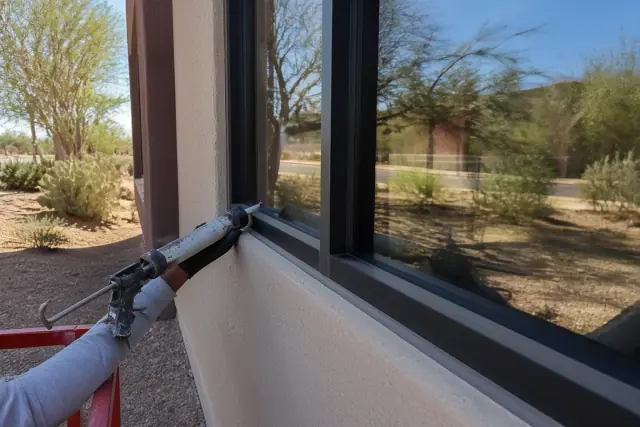
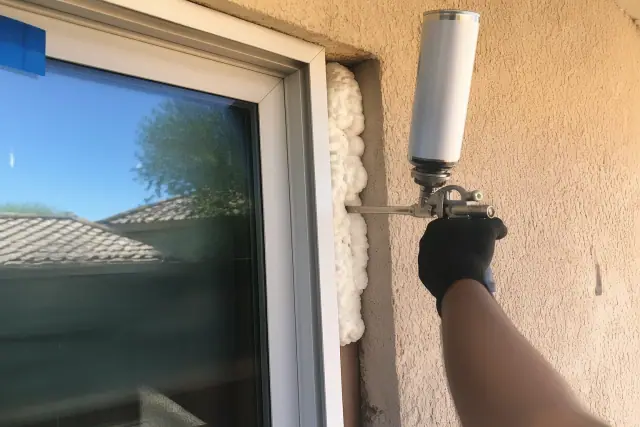
Contractor applying insulating foam between a window frame and stucco wall at a job site in Phoenix, AZ.

We install replacement and new-construction windows with glass packages selected for Phoenix exposure. Manufacturer-specified fasteners, insulation, flashing, and sealant details help the finished opening perform as its NFRC rating indicates.

Request Estimate

Window Repair and Glass Replacement

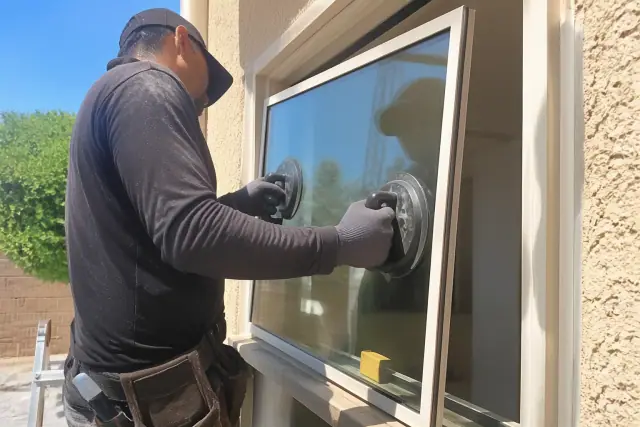
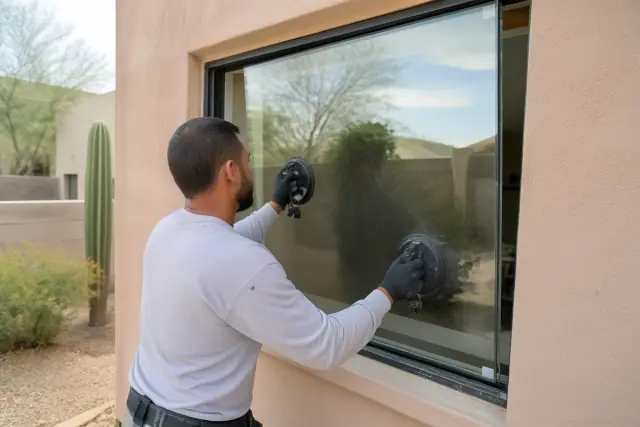
Technician using suction tools to install a replacement glass window into a stucco wall in Phoenix, AZ.

Foggy panes, cracked glass, broken hardware, and failed seals do not always require full-frame replacement. When the existing frame remains structurally sound, we can evaluate glass replacement, glazing, hardware, or seal repair as the focused solution.

Request Estimate

Custom Window Fabrication

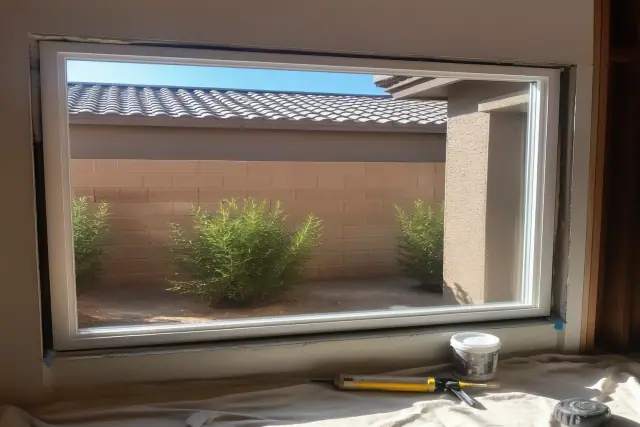
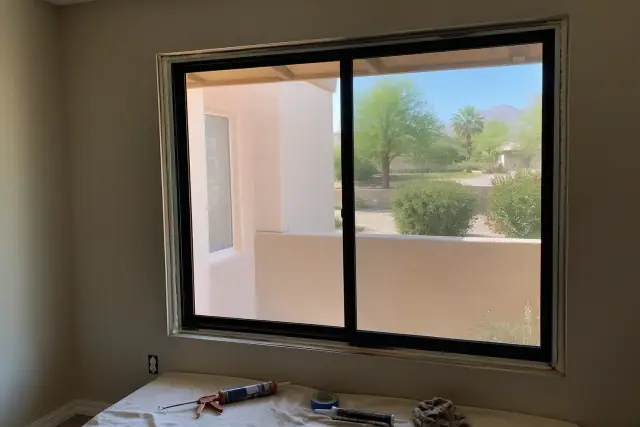
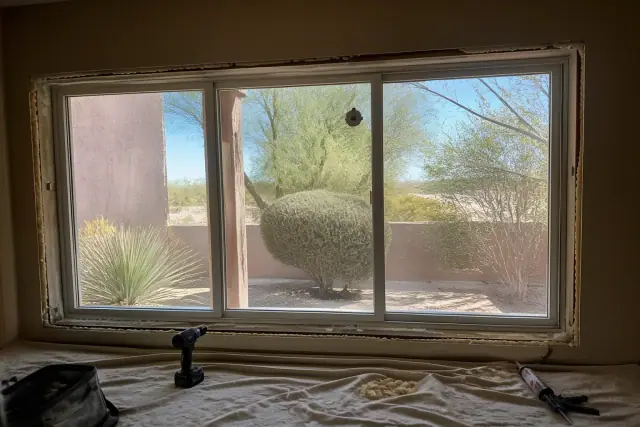
Window frame installation in progress on a stucco wall at a job site in Phoenix, AZ.

Custom windows are sized and styled around a home's architecture, sun exposure, views, and ventilation goals. This approach supports distinctive openings in ranch homes, mid-century builds, and remodeled properties without relying on a generic configuration.

Request Estimate

Sliding, Casement and Awning Windows

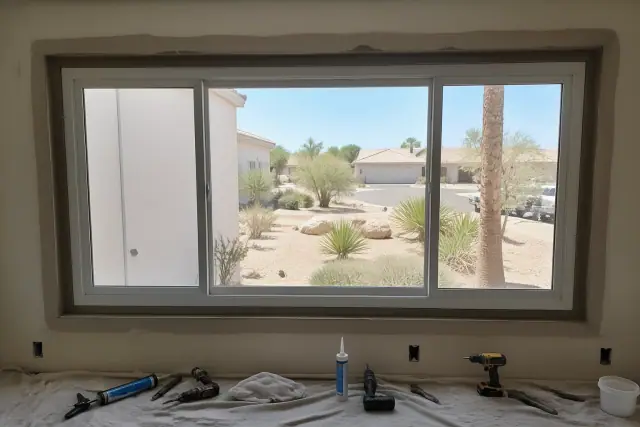
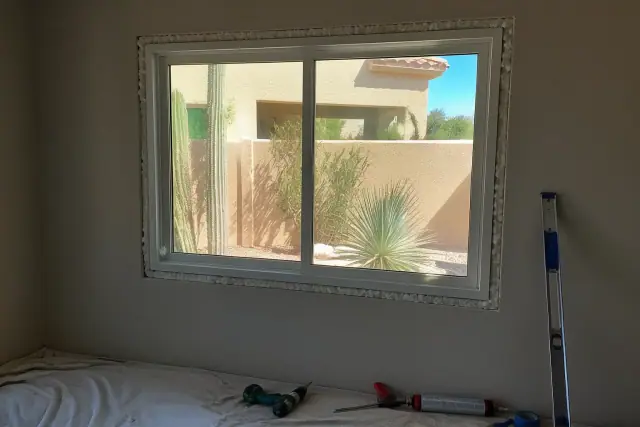
New window frame installed in a stucco home with tools on a drop cloth in Phoenix, AZ.

Sliding windows and doors suit locations with limited swing clearance, while casement and French casement windows close tightly and can capture Valley breezes. Top-hinged awning windows add ventilation while helping keep out water during a light monsoon rain.

Request Estimate

Picture, Bay and Bow Windows

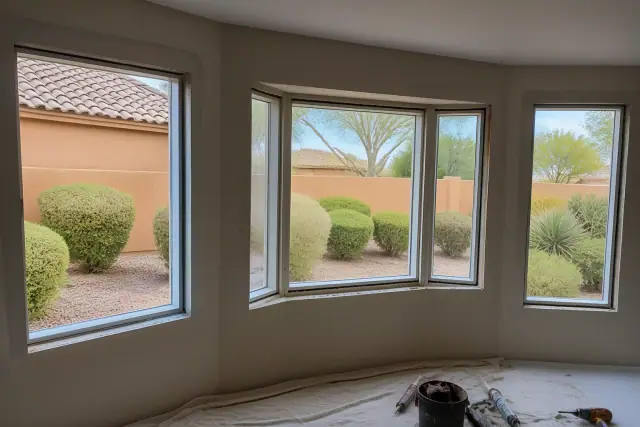
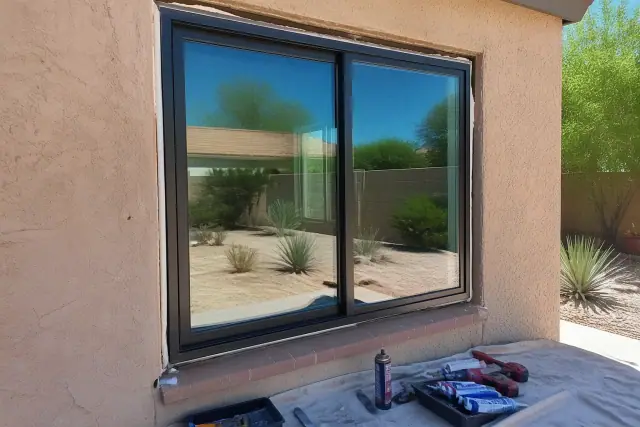
Window frame installation at a job site in Phoenix, AZ, showing tools and materials on a drop cloth.

Fixed picture windows eliminate operable seams and frame desert or mountain views with strong energy performance. Bay and bow configurations add architectural character and usable interior space to window walls, including single-hung and double-hung arrangements.

Request Estimate

Commercial Windows and Storefront Glass

A technician sealing the edges of new storefront windows with caulk on a commercial building in Phoenix, AZ.

We install commercial windows and storefront glass for offices, retail spaces, and mixed-use buildings. Glass thickness and framing are sized to structural exposure, wind-load needs, safety-glazing requirements, and City of Phoenix commercial building code.

Request Estimate
Frame and Glass Options

Types of Energy-Efficient Window Options

Frame material, pane count, coating, gas fill, spacer design, and exposure all affect the final result. We compare these elements against comfort goals, noise concerns, opening style, and the amount of western sun each elevation receives.

New vinyl window installation in a stucco home in Phoenix, AZ, with tools and materials on a drop cloth.

Vinyl Windows

Vinyl is our most frequently installed frame material in Phoenix because it does not conduct heat like aluminum. UV-stabilized PVC and multi-chambered construction help the frame resist direct sun and stay cooler to the touch on 115-degree days.

  • Multi-chambered frames trap insulating air
  • UV-stabilized PVC resists yellowing and brittleness
  • No repainting and minimal routine maintenance
  • Quality products typically perform for 20-30 years with proper installation
  • A practical, affordable option for budget-conscious homeowners
Request Estimate
Aluminum window frame being installed in a stucco home with desert landscaping in Phoenix, AZ.

Aluminum Windows

Aluminum frames remain common in Phoenix's mid-century homes and commercial storefronts. Because aluminum conducts heat, the glass package and thermal-break details deserve close attention when energy performance is the goal.

  • Hardware repair for structurally sound existing frames
  • Glazing and glass replacement where full removal is unnecessary
  • Thermal breaks that reduce frame conduction
  • Low-E glass packages selected for desert exposure
  • Commercial framing sized to structural use
Request Estimate
Double-pane window frame installation with tools on a drop cloth at a jobsite in Phoenix, AZ.

Double-Pane Low-E Windows

Double-pane Low-E windows are the standard residential upgrade for many Phoenix homes. Two panes and an insulating gas-filled gap cut conductive transfer while the coating manages solar gain.

  • Typical U-factor range of 0.25-0.30
  • Approximate cost of $400-$900 per window
  • Argon or krypton between the panes
  • Low-E coating for solar and UV control
  • Balanced daylight and cooling-season performance
Request Estimate
Triple-pane window installation in progress at a residential property in Phoenix, AZ.

Triple-Pane Low-E Windows

Triple-pane windows add a third glass layer and another gas-filled space. The extra insulation can make sense when noise along I-17 or Loop 101 matters alongside heat control, although typical Phoenix cooling loads do not always require it.

  • Typical U-factor range of 0.15-0.20
  • Approximate cost of $800-$1,400 per window
  • Additional insulating glass and gas fill
  • Useful sound reduction near busy corridors
  • Best evaluated against exposure and budget
Request Estimate
Technician installing impact-resistant laminated glass into a window frame at a home in Phoenix, AZ.

Impact-Resistant Laminated Glass

Phoenix does not have hurricane-code window requirements, but impact-resistant laminated glass can add security and resilience against monsoon-driven debris. We evaluate it as an exposure-specific option rather than a default for every opening.

  • Laminated construction for added glass retention
  • Added security for vulnerable openings
  • Resistance to monsoon-driven debris impacts
  • Available with energy-efficient glass packages
  • Selected according to each opening's exposure
Request Estimate
Finding Your Right Fit

Choosing the Right Energy-Efficient Window Approach

A useful recommendation accounts for frame condition, architecture, operating style, sun by elevation, desired views, ventilation, and nearby noise. We use those details to narrow the frame, coating, pane count, and installation method instead of treating every Phoenix opening the same.

Desert-Climate Product Selection

Low-E2 or Low-E3 coatings, gas fills, frame materials, and pane counts are compared against each elevation's western exposure. ENERGY STAR certification and NFRC ratings provide the U-factor and Solar Heat Gain Coefficient behind the recommendation.

Standards-Based Installation

Our crews follow manufacturer instructions, AAMA installation standards, and City of Phoenix inspection requirements. Current licensing through the Arizona Registrar of Contractors supports compliant replacement and new-construction work.

Phoenix Property Experience

Our project experience includes ranch homes in the Biltmore corridor, mid-century properties near South Mountain, and downtown commercial storefronts. That range informs how we address stucco openings, Arizona UV exposure, monsoon dust, and different building uses.

What Sets Us Apart

Why Choose Us for Energy-Efficient Window Installation?

Phoenix Window Co. connects product ratings to the conditions at the actual opening, then carries those details through measurement, removal, sealing, and final inspection. We provide the ENERGY STAR and NFRC documentation needed for supported rebate or tax-credit paperwork and explain why a recommended frame and glass package fits the property.

Request a Home Assessment

Excessive Solar Heat Gain

Clear single-pane glass and aging aluminum frames allow radiant heat to build throughout the day. West- and south-facing rooms often show the problem first because afternoon sun raises interior surface temperatures near the glass.

Long Cooling Cycles

Unwanted heat entering through windows can keep air conditioners running longer during Phoenix's five-month cooling season. Better solar control reduces one of the loads the HVAC system must overcome from late spring into early fall.

Foggy or Cloudy Glass

Moisture or haze between panes usually points to a failed insulated-glass seal. If the surrounding frame is sound, glass replacement may restore clarity and insulated performance without removing the complete frame.

Air and Dust Leakage

Gaps around a window can bypass the insulated glass and admit both conditioned air loss and Valley windblown dust. Even a 1/4-inch gap can undermine the opening's NFRC-rated performance, making precise measurements and perimeter sealing essential.

UV-Related Interior Fading

Untreated glass allows ultraviolet exposure to fade hardwood flooring, upholstery, and artwork. Low-E glass manages those wavelengths while keeping visible daylight available to the room.

Monsoon Debris Damage

Wind-driven debris can crack glass, damage seals, or break hardware during summer storms. Repair, glass replacement, or laminated-glass options can be evaluated according to the extent of damage and the opening's ongoing exposure.

How It Works

Our Energy-Efficient Window Process

Installation quality determines whether a rated window performs as intended. Our process moves from opening-specific assessment through product selection, field measurement, careful removal, standards-based installation, and a final operating check.

01.

Home Assessment and Inspection

We walk the property and inspect frame condition, current glass, operating issues, and sun exposure by elevation. This visit identifies whether an opening needs repair, glass replacement, or a complete window replacement.

02.

Product and Glass Selection

We compare frame materials, operating styles, pane counts, Low-E coatings, gas fills, and NFRC label data. The recommendation reflects thermal performance, western exposure, ventilation, noise, and the property's architecture.

03.

Precise Field Measurements

Each opening is measured to fractions of an inch so the ordered unit matches the actual frame and surrounding finish. Accurate dimensions reduce the risk of gaps that create air infiltration or complicate flashing and sealant lines.

04.

Careful Removal and Preparation

Old sashes and frames are removed with attention to stucco, drywall, and existing paint lines. We prepare the opening for the new assembly and haul away removed debris the same day.

05.

Insulated and Flashed Installation

The unit is secured with manufacturer-specified fasteners, then detailed with closed-cell foam insulation and flashing. These AAMA-aligned details help seal out air leakage and dust intrusion while supporting City inspection requirements.

06.

Final Operation and Seal Check

We test operation, review sealant lines, verify weep holes, and walk the completed work with you. Any required permit inspection is then closed out with the finished installation ready for use.

Plan Your Window Upgrade

Schedule an Energy-Efficient Window
Consultation

Tell us which rooms overheat, which openings are drafty or fogged, and what matters most for comfort, views, ventilation, or noise. We will assess the existing windows and explain the frame, glass, repair, or replacement options that fit the property.

Window Planning Help

Energy-Efficient Window FAQs

These answers cover Phoenix heat performance, pane and frame choices, project costs, repairs, incentives, installation details, and commercial applications. Product ratings and eligibility requirements should always be checked for the specific window and project.

Call Our Window Team

Dual-pane vinyl windows with Low-E glass and argon gas fill are a strong fit for Phoenix, with typical U-factors of 0.25-0.30. Low-E2 or Low-E3 coatings can be selected according to western exposure, while vinyl avoids the heat conduction of aluminum. That distinction matters because dark frame surfaces can exceed 150 degrees in direct summer sun.

The federal Energy Efficient Home Improvement Credit, also called Section 25C, allows homeowners to claim 30% of the cost of qualifying ENERGY STAR windows, up to a $600 annual cap, when current Most Efficient and NFRC requirements are met. It applies to a primary residence and depends on the specific product. We provide product documentation, but homeowners should confirm current-year eligibility with a tax professional before filing.

They can make the clearest comfort difference in west- and south-facing rooms that receive direct afternoon sun. Replacing single-pane or aging aluminum windows with Low-E dual-pane vinyl units commonly reduces cooling costs by 20-30%, often about $250-$500 annually depending on home size and orientation. The windows can also reduce hot spots and UV-related fading.

Income-qualified weatherization programs administered through the Arizona Department of Housing and local community action agencies may cover window replacement for eligible households. Requirements depend on the program and available funding. Contact the appropriate community action agency or the Arizona Department of Housing to check current eligibility.

Phoenix replacement projects generally run $400-$1,200 per window installed. A whole-house project covering six to eight windows typically falls between $3,000 and $5,500. Frame material, glass package, window size, and opening conditions shape the final quote.

Single-pane windows have a typical U-factor of 1.0+ and an approximate cost of $150-$300, but they are not recommended for Arizona's climate. Double-pane Low-E windows add an insulating gap and typically cost $400-$900, while triple-pane Low-E windows add a third layer and typically cost $800-$1,400. Triple pane can be useful when noise or extreme exposure justifies the added cost.

Quality vinyl windows typically perform for 20-30 years in Phoenix with proper installation. UV-stabilized PVC helps resist the yellowing and brittleness caused by prolonged Arizona sun. Multi-chambered construction also adds insulation without the frame conduction associated with aluminum.

A microscopically thin metallic coating reflects infrared and ultraviolet wavelengths outward while allowing visible light into the room. In Phoenix, that solar control helps rooms stay brighter without taking on as much radiant heat. It can also block up to 95% of harmful UV rays that fade floors, furniture, and artwork.

Fog or cloudiness between panes usually indicates a failed seal. If the existing frame remains structurally sound, glass replacement can often address the insulated-glass failure without full frame removal. We inspect the frame, glazing, seal, and hardware before recommending the repair scope.

Some Salt River Valley homeowners qualify for rebates through Salt River Project or Arizona Public Service when they install qualifying products. Eligibility depends on the product and utility program. We provide the product documentation and paperwork support needed for an applicable rebate submission.

A high-performance glass unit cannot deliver its rated efficiency when gaps around the frame let air and dust bypass it. Accurate measurement, manufacturer-specified fasteners, closed-cell foam, flashing, and clean sealant lines protect the opening's performance. AAMA-aligned work also supports City of Phoenix inspection requirements.

Triple-pane glass can be worth considering near busy corridors such as I-17 or Loop 101 when noise reduction matters alongside thermal performance. Its typical U-factor range is 0.15-0.20, but the added cost is not always necessary for Phoenix cooling loads alone. We compare exposure, sound concerns, and budget before recommending it.

Yes. We install commercial windows and storefront glass systems for offices, retail spaces, and mixed-use buildings, including work in downtown Phoenix and the Camelback Corridor. Glass thickness and framing are matched to the building's exposure, wind load, safety-glazing requirements, and use.