Proudly serving Phoenix, Scottsdale, Mesa, Glendale, Chandler, Gilbert & surrounding areasCall or Text 24/7: 602-464-4613
Aerial drone view of a residential neighborhood with Saguaro cacti and mountain silhouettes in Phoenix, AZ.

Thermally Broken Aluminum Windows Installation & Replacement in Phoenix, AZ

Phoenix Window Co. installs aluminum windows for homes, offices, and storefronts across Phoenix and the Salt River Valley. We provide new installation, full-frame and pocket replacement, window repair, and glass replacement for cracked panes, failed seals, and fogged insulated glass units. Customers can also choose energy-efficient, custom, sliding, casement, awning, picture, bay, bow, vinyl, and commercial window options. Each project is matched to the opening, building style, orientation, and sun exposure.

Phoenix summer highs can push past 110°F for weeks, while direct sun can drive west-facing surface temperatures well above 150°F. That heat, intense UV, dust storms, and monsoon winds put sustained pressure on frames, seals, glass, and surrounding stucco. We address those conditions with thermal break aluminum extrusions, region-appropriate Low-E glass, and anodized or powder-coated finishes. Careful flashing, weather stripping, caulking, and performance-focused glass selection help the completed assembly manage desert exposure.

Start with a free in-home consultation to compare frame profiles, glass packages, operating styles, and installation methods for your property.

Phoenix Window Co. provides aluminum window installation in Phoenix and serves nearby Scottsdale, Tempe, Mesa, Chandler, and Glendale.

★ ★ ★ ★ ★4.9/5.0 Customer Rating · 21 Years of Window Experience · Thousands of Windows Installed · Licensed, Bonded & Insured · Serving Homes & Businesses

Aluminum Window Options & Benefits

How Modern Aluminum Windows Work

A modern thermal break frame separates the interior and exterior aluminum sections with a non-conductive polyamide strip. This interrupts the direct metal-to-metal path that allowed older aluminum frames to conduct outdoor heat indoors.

Dual-pane Low-E glass adds another layer of desert-climate performance. National Fenestration Rating Council labels show U-factor and solar heat gain coefficient values, allowing customers to compare how the complete glass-and-frame assembly manages heat transfer and radiant sun.

Anodized and powder-coated finishes protect the aluminum surface against intense UV and routine dust exposure. The resulting frame stays slim and structurally stable while supporting glass packages selected for the property's orientation.

Benefits of Aluminum Windows in Phoenix

Aluminum combines structural strength, narrow sightlines, and low-maintenance finishes with modern thermal performance. When the frame, glass, and installation details are selected together, it can suit both residential architecture and demanding commercial openings.

  • Thermal breaks interrupt conductive heat transfer
  • Low-E glass reflects infrared heat outdoors
  • Stable frames resist warping, bowing, and softening
  • Aluminum does not rot, swell, or attract termites
  • Slim profiles preserve a larger visible glass area
  • Anodized and powder-coated finishes resist chalking
  • Quality finishes support corrosion resistance
  • Low-E coatings help protect interiors from UV fading
Installation, Replacement & Repair

Aluminum Window Services

Phoenix spans 517.9 square miles, with window needs ranging from historic bungalows and mid-century ranch homes to offices, storefronts, and new construction. Our services cover the aluminum frame, glass, opening, and installation details needed for each property type.

Aluminum Window Installation

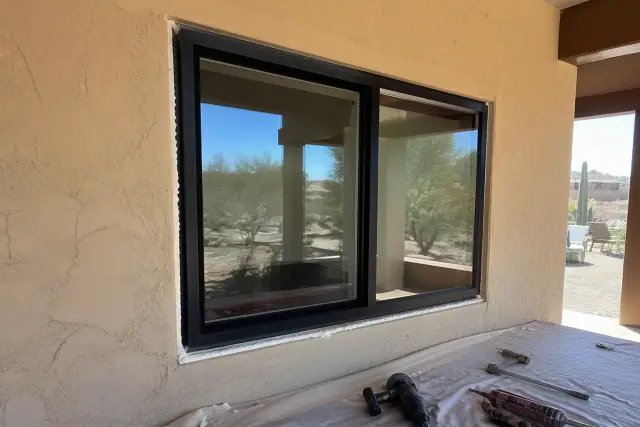
Aluminum window frame installation on a sun-bleached stucco wall in Phoenix, AZ with tools on a drop cloth.

New aluminum windows are configured around the opening, wall construction, sun exposure, and desired operation. We coordinate thermal break frames, Low-E glass, finish, flashing, insulation, weather stripping, and sealants as one complete installation.

Request Estimate

Aluminum Window Replacement

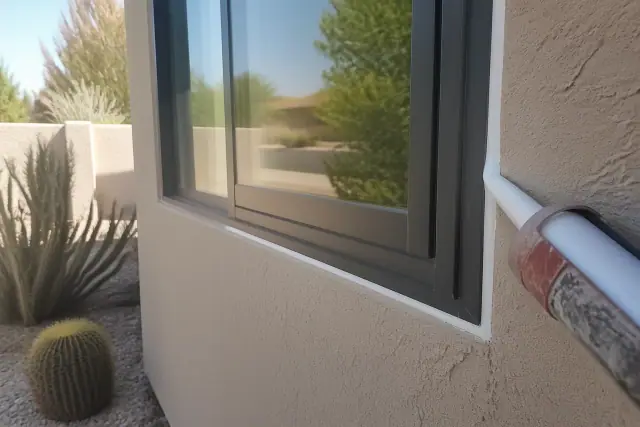
Contractor sealing a new window frame with caulk on a stucco home in Phoenix, AZ with desert landscaping.

Replacement can use a full-frame method when the existing frame is compromised or a pocket method when the original frame remains sound. That choice is especially important in a 1960s home, where irregular openings, stucco, and older frame conditions can affect the work.

Request Estimate

Aluminum Window Repair

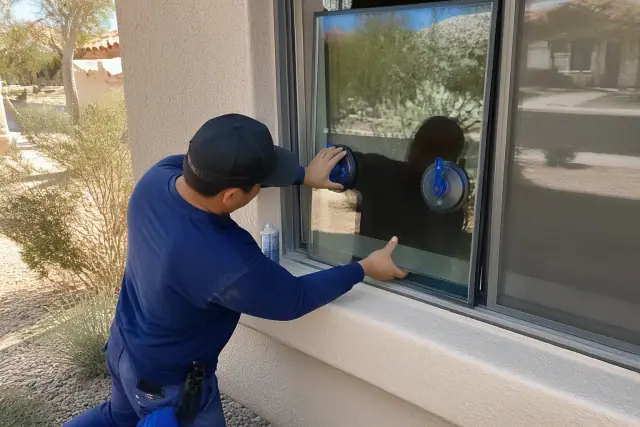
Technician installing a replacement glass window insert with suction tools at a home in Phoenix, AZ.

Repair starts by separating frame, seal, hardware, weather-stripping, and glass problems. We address operability, air or water leaks, failed seals, and worn components when the surrounding frame can remain in service.

Request Estimate

Glass & Insulated Unit Replacement

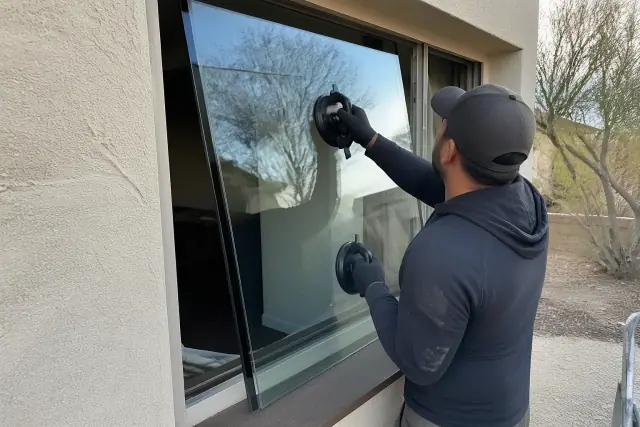
Technician installing a replacement glass unit into an aluminum window frame at a jobsite in Phoenix, AZ.

Cracked panes, failed seals, and fogged insulated glass units do not always require replacing the entire window. We evaluate the frame and glazing system before recommending glass replacement, a new insulated unit, or a complete window replacement.

Request Estimate

Custom Aluminum Windows

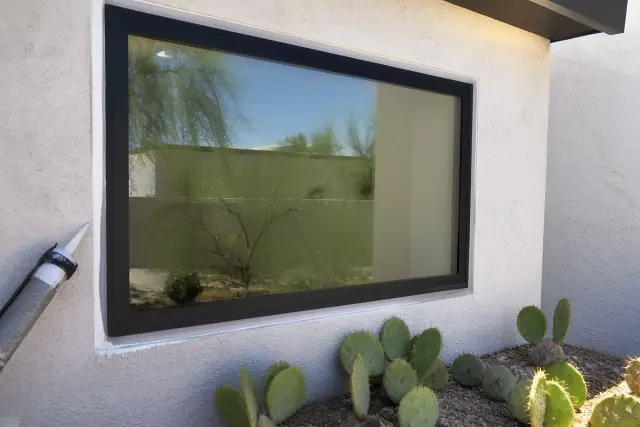
Caulk being applied to a custom aluminum window frame on a stucco wall in Phoenix, AZ with desert landscaping.

Custom manufacturing fits non-standard openings, historic profiles, and architectural specifications that stock windows cannot address cleanly. Frame color, glass package, operating style, and sightline can be selected to respect the building's character while adding modern performance.

Request Estimate

Commercial Aluminum Windows

Commercial aluminum window frame installed in a stucco wall at a jobsite in Phoenix, AZ.

Offices and storefronts benefit from aluminum's strength-to-weight ratio, narrow profiles, and capacity for larger glass areas. We match frame, glazing, finish, and installation details to the commercial opening and its exposure.

Request Estimate
Operating & Fixed Configurations

Aluminum Window Style Options

A metro area with more than 5.19 million residents includes a wide mix of building ages and architectural styles. Sliding, casement, awning, hung, picture, bay, and bow windows each balance ventilation, daylight, views, sealing, and structural needs differently.

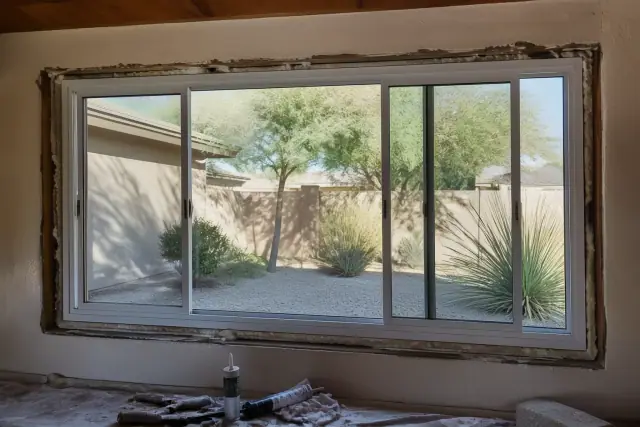
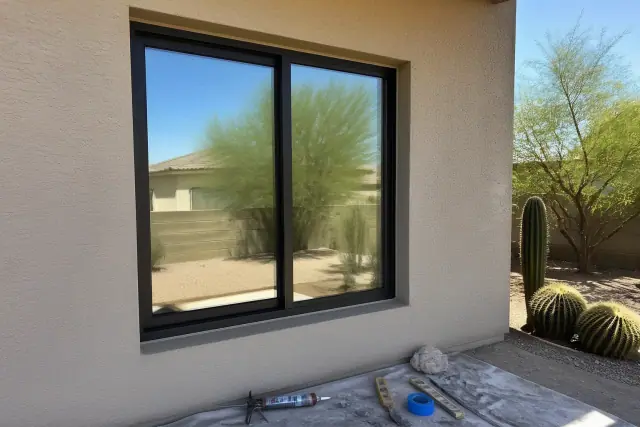
Sliding aluminum window installation in progress on a stucco wall at a jobsite in Phoenix, AZ.

Sliding Aluminum Windows

Horizontal sliding windows suit contemporary and mid-century Phoenix architecture, providing broad glass area with straightforward operation. Their track system avoids the vertical balance mechanisms that dust can bind over time.

  • Horizontal track operation
  • Wide visible glass area
  • Fits contemporary architecture
  • Simple, low-maintenance movement
  • Practical for dust-prone conditions
Request Estimate
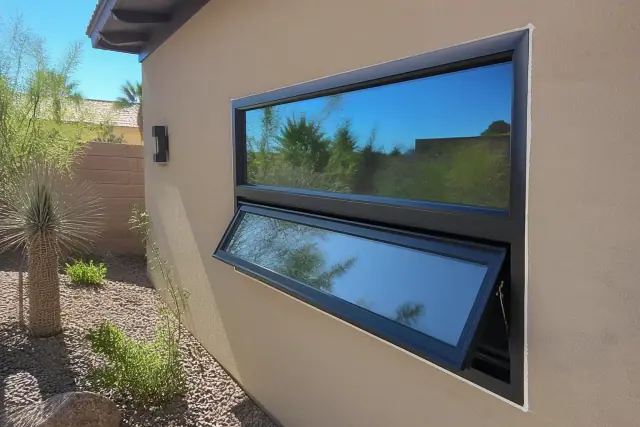
A contractor caulking the frame of a newly installed aluminum casement window at a home in Phoenix, AZ.

Casement & Awning Windows

Casement and awning windows crank outward and pull tightly against the frame when closed. That compression seal supports weather resistance when monsoon winds and driving rain place greater pressure on exposed openings.

  • Outward-cranking operation
  • Tight compression seal
  • Strong ventilation control
  • Useful for exposed openings
  • Casement and awning configurations
Request Estimate
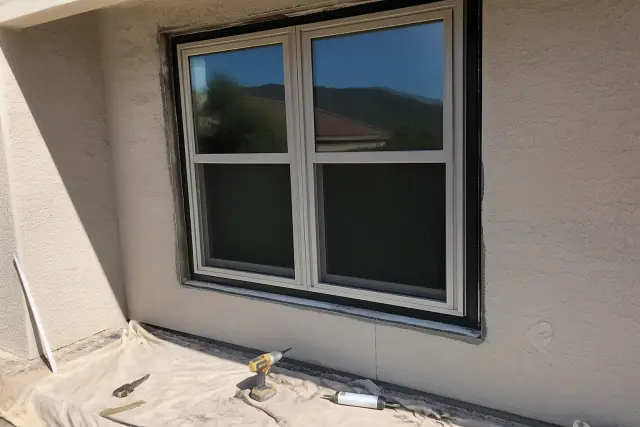
Newly installed window frame in a stucco wall at a job site in Phoenix, AZ, with tools on a drop cloth.

Single & Double Hung Windows

Single and double hung windows retain a familiar vertical profile while adding modern balances, locks, frames, and glass. These improvements are especially relevant when replacing older units in Phoenix homes built before the 1990s.

  • Traditional vertical proportions
  • Single or double sash operation
  • Upgraded balance systems
  • Modern locking hardware
  • Familiar residential appearance
Request Estimate
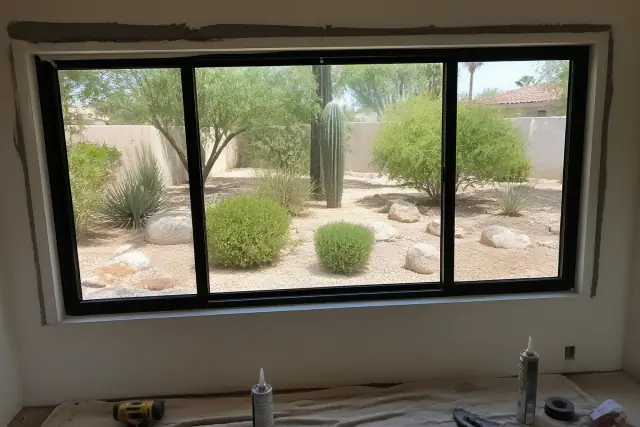
Aluminum window frame installed in a Phoenix, AZ stucco wall with tools and desert landscape visible through the glass.

Picture & Fixed Windows

Picture and fixed windows maximize daylight and unobstructed views without a moving sash. With no operating mechanism, they are among the most airtight choices for limiting gaps in the window assembly.

  • Maximum daylight
  • Unobstructed views
  • No moving sash
  • Tight fixed glazing
  • Useful for larger glass areas
Request Estimate
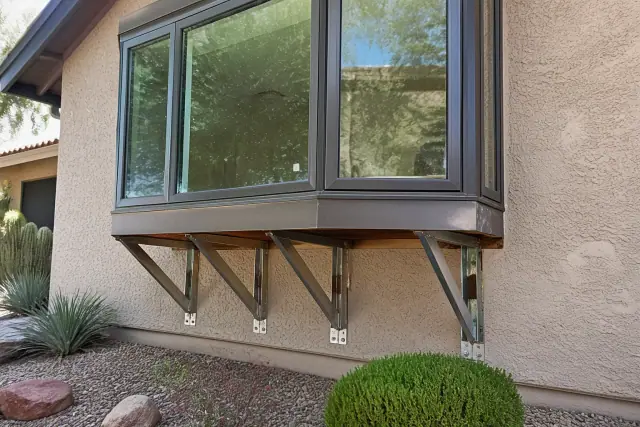
Support brackets being reinforced under a bay window on a stucco house in Phoenix, AZ.

Bay & Bow Windows

Bay and bow windows project beyond the wall to create interior space and bring light in from multiple angles. Their custom measurements, multiple glass units, and structural framing make installation more involved, with projects reaching $5,000 or more depending on size and complexity.

  • Projects beyond the wall plane
  • Adds usable interior space
  • Light from multiple angles
  • Requires custom measurements
  • May require structural framing
Request Estimate
Finding Your Right Fit

Choosing the Right Aluminum Window Approach

The right approach depends on budget, architectural style, existing frame condition, opening size, orientation, sun exposure, ventilation goals, and whether the project must match historic or mid-century character. We compare frame profiles, thermal breaks, Low-E glass packages, finishes, and operating styles during the in-home consultation.

Desert-Climate Performance Selection

We select thermal breaks and Low-E glass with Phoenix solar exposure in mind, then review U-factor and solar heat gain coefficient data with the customer. Our crews are familiar with ANSI/AAMA/WDMA 101/I.S.2 performance standards that govern window testing.

Licensed, Documented Installation

Phoenix Window Co. is a licensed Arizona Registrar of Contractors firm and carries insurance and project documentation. We pull permits through the City of Phoenix Development Services Department or the applicable Maricopa County office based on jurisdiction.

Precise Fit and Finish

We field-measure older and non-standard openings down to the eighth of an inch before ordering custom units. Installation details account for stucco walls and expansive soil, with flashing, insulation, weather stripping, and caulking placed to control gaps and moisture intrusion.

What Sets Us Apart

Why Choose Us for Aluminum Window Installation?

A durable window depends on the frame, glass package, finish, opening preparation, and installation method working together. Our process combines desert-climate product selection with precise measurements, permit-aware work, and a final operational and seal check.

Request Free Consultation

Excessive Solar Heat Transfer

Older aluminum frames without a thermal break create a direct path for outdoor heat to move indoors and may feel hot to the touch. A non-conductive polyamide barrier, low-SHGC glass, insulation, and proper perimeter sealing address different parts of that heat-transfer problem.

UV Fading and Finish Damage

Constant desert sun can fade flooring, furniture, and window treatments while degrading frame surfaces not made for sustained exposure. Low-E coatings reduce UV transmission, and anodized or powder-coated aluminum resists the chalking and color loss associated with lesser finishes.

Fogged or Failed Glass Seals

Fog or moisture between panes points to a failed insulated glass seal rather than ordinary surface condensation. We inspect the glazing and frame to determine whether the insulated unit can be replaced while the aluminum frame remains in service.

Warped or Compromised Frames

Warping, bowing, damaged corners, or a compromised existing frame can keep a sash from operating and sealing correctly. When the original frame is no longer sound, full-frame replacement lets us address the opening instead of placing a new unit inside a failing assembly.

Cracked Window Glass

Cracked glass affects the integrity of the pane and may compromise an insulated unit. We evaluate the damage, glass package, and surrounding frame before recommending glass-only replacement or a complete new window.

Dust, Wind, and Water Leaks

Seasonal dust storms and monsoon winds can drive debris and rain against exposed windows, revealing gaps in seals, flashing, caulk, or weather stripping. Inspection should identify the actual entry path before repair so the work targets the frame, glazing, hardware, or perimeter joint involved.

How it works

Our Aluminum Window Process

The process moves from an in-home assessment through product selection, field measurement, manufacturing, installation, and a final walkthrough. Each stage connects the window specification to the opening and the Phoenix conditions it will face.

01.

In-Home Consultation

We assess the existing windows and discuss frame color, glass package, operating style, goals, and budget. The consultation also establishes whether repair, glass replacement, pocket replacement, or full-frame replacement fits the condition.

02.

Opening and Exposure Review

We review the opening, surrounding stucco, structural conditions, orientation, and sun exposure. Any repair work needed around the opening is identified before the window is ordered.

03.

Precise Field Measurement

Each opening is measured to its actual dimensions before custom units are ordered. Careful field measurements reduce the gaps and air leaks that can result when an off-the-shelf window is forced into an irregular opening.

04.

Custom Window Manufacturing

The selected frame profile, thermal break, finish, glass package, and operating configuration are manufactured for the measured opening. Custom sizing is particularly useful for older homes, historic profiles, and architectural specifications.

05.

Full-Frame or Pocket Installation

Installers use a full-frame method for a compromised frame or a pocket method when the original frame is sound and worth preserving. Flashing, insulation, weather stripping, and caulking complete the perimeter while protecting stucco and trim where possible.

06.

Operation and Seal Check

Before completion, we test each window and confirm that it locks, slides, or cranks correctly. We check seals, walk the property with the customer, and review care guidance for the new glass and hardware.

Plan Your Window Project

Schedule an Aluminum Window
Consultation

Request a free in-home consultation and a line-by-line window estimate covering material, labor, glass package, and installation method. Compare aluminum frame styles and performance data before choosing the approach for your Phoenix property.

Aluminum Window Help

Aluminum Window FAQs

Review common questions about thermal breaks, glass performance, installation methods, costs, styles, repairs, and maintenance for aluminum windows in Phoenix.

Call Our Window Team

Modern aluminum windows can suit Phoenix when the frame includes a thermal break and the glass package is selected for low solar heat gain. Aluminum also remains dimensionally stable under intense sun, while anodized or powder-coated finishes resist desert exposure.

A thermal break is a non-conductive polyamide strip between the interior and exterior aluminum frame sections. It interrupts the direct metal-to-metal path that would otherwise conduct outdoor heat toward the interior.

Low-E coatings reflect infrared radiation outdoors and reduce UV transmission. NFRC labels provide U-factor and solar heat gain coefficient values so the heat-transfer performance of the glass-and-frame assembly can be compared before installation.

Properly installed aluminum windows commonly last 20 to 30 years, with some maintained installations performing longer. Finish quality, glazing, weather stripping, installation, and routine service all influence useful life in Phoenix conditions.

Phoenix replacement window costs typically run about $400 to $1,200 per window installed, depending on size, material, glass package, and whether the work uses a pocket or full-frame method. A standard aluminum window often falls between $400 and $850 before installation labor, while a basic 4-foot single or double window commonly runs $500 to $550 installed.

Size, frame profile, finish, glass package, operating style, custom manufacturing, and installation method all affect the estimate. Structural framing, irregular openings, historic profiles, stucco repairs, and the difference between pocket and full-frame replacement can also change the project scope.

Thermal break aluminum provides strong dimensional stability, slim sightlines, and high strength-to-weight, while vinyl uses a bulkier profile and can warp or bow in direct sun. Both can perform reasonably when properly manufactured, so budget, architecture, glass package, and the need to match existing frames should guide the choice.

Available configurations include horizontal sliders, casement and awning windows, single and double hung windows, fixed picture windows, and projecting bay or bow windows. The right style depends on ventilation, daylight, view, sealing, opening size, and structural requirements.

Full-frame replacement removes the existing frame when it is compromised or the opening needs more complete correction. Pocket replacement places the new unit within a sound original frame, which can preserve more surrounding stucco and trim.

Permit handling depends on the project and jurisdiction. Phoenix Window Co. pulls applicable permits through the City of Phoenix Development Services Department or the appropriate Maricopa County office.

Routine care should keep tracks and operating components clear of dust and periodically check glazing, weather stripping, caulk, and hardware. Timely service helps preserve smooth operation and catches seal or water-entry problems before they affect more of the opening.

Yes. Custom windows can be manufactured for non-standard openings, historic profiles, and architectural specifications, with the frame color, glass package, and operating style selected for the property. Field measurements are taken before ordering so the unit fits the actual opening.

Sometimes. If the aluminum frame remains sound, a cracked pane or failed insulated glass unit may be replaced without changing the whole window. An inspection of the frame, glazing system, seals, and hardware determines whether glass-only work or complete replacement is appropriate.