Worn Crank Hardware
Crank operators commonly need attention after 10 to 15 years. A handle that turns without moving the sash usually has stripped internal gear teeth and needs an operator replacement.
Phoenix Window Co. services casement windows on residential and commercial projects across the Salt River Valley, where triple-digit summers, heat cycling, monsoon dust, and wind can wear operators, hinges, and seals. Common problems include cranks that spin without moving the sash, windows that bind or will not close, torn weatherstripping, drafts, and fogged insulated glass. Identifying the failed component helps separate routine maintenance and focused repair from full replacement.
Crank operators commonly need attention after 10 to 15 years. A handle that turns without moving the sash usually has stripped internal gear teeth and needs an operator replacement.
Weatherstripping that is compressed or torn lets dust, drafts, and monsoon-driven rain pass around the sash. Fog trapped between panes is different: it indicates a failed IGU seal that cleaning cannot reach.
Sagging hinges, a warped sash, grit along the frame edge, or a racked frame can keep a casement window from seating and locking. Checking alignment first avoids replacing hardware that is not the cause.
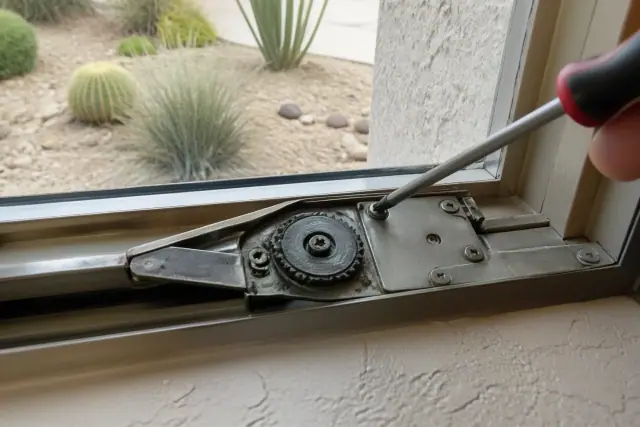
A stripped gear leaves the crank handle spinning without driving the sash. The worn teeth inside the operator distinguish this failure from a dirty track.
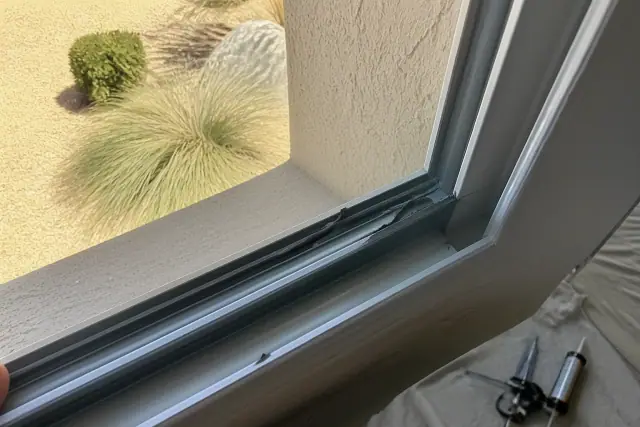
A compressed or split seal often collects dust along the frame edge. Even a small weatherstrip gap can allow drafts and storm-driven rain inside.
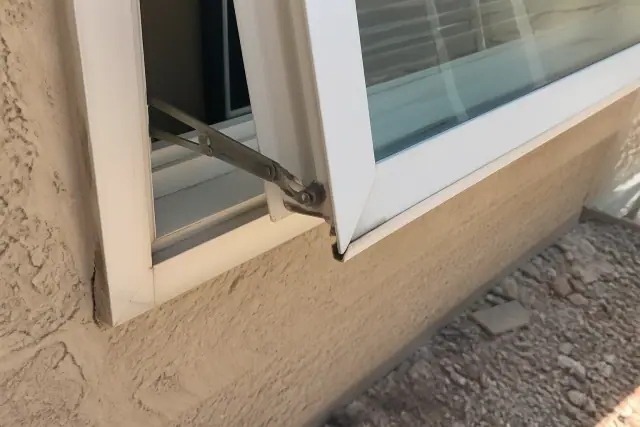
A dropped casement sash leaves an uneven gap between the sash and frame. Measuring the reveal at all four corners makes hinge sag, sash warp, or frame racking easier to compare.
Clean tracks and hinge arms twice a year and again after any haboob or major dust event. Use a silicone-based lubricant because petroleum products attract dust in the dry climate.
Foam or bulb seals typically need replacement every 8-12 years. Fogging between panes points to a failed IGU seal and calls for glass-unit replacement instead of surface cleaning.
Installed crank operator and hardware replacement typically costs $150-$400 per window, while full replacement generally runs $700 to $2,100 or more per unit installed. Frame material, glass package, size, and custom openings affect full-unit scope.
After checking sash squareness, see whether the strike plate needs to shift a few millimeters as the sash settles. Also verify that the outward swing clears covered patios, pool decks, tight walkways, and window air-conditioning units.
| Symptom | Likely Cause | Practical Action |
|---|---|---|
| Handle spins but the sash stays still | Stripped operator gear teeth | Replace the crank operator |
| Sash moves roughly or sticks | Track debris, dried lubricant, or a bent scissor arm | Clean and lubricate, then inspect the arm |
| Dust, drafts, or rain enter around the sash | Compressed or torn weatherstripping | Replace the sash seal |
| Fog appears between the panes | Failed insulated glass unit seal | Replace the glass unit |
| The sash will not seat or lock | Sagging hinges, sash warp, or frame racking | Check alignment before replacing hardware |
Casement sashes seal by compressing against the frame, so the operator gear, scissor or friction hinges, weatherstripping, lock, and IGU must stay aligned. In Phoenix, swings from 110-plus degree afternoons to cooler nights speed expansion and contraction in vinyl and aluminum, while monsoon dust works into tracks and moving parts. Chlorine near pool decks can accelerate corrosion on aluminum hinges, and minor settling over expansive caliche soil can rack a frame enough to cause binding.
Well-maintained casement windows average 20 to 30 years, although Phoenix heat and dust can shorten that service life without regular hardware care. Repair is often practical when the frame remains sound because cranks, hinges, locks, rollers, and insulated glass units can be replaced separately; replacement becomes more relevant when frame damage or persistent sash distortion broadens the scope. Structural work affecting the rough opening may require a permit through the City of Phoenix Planning and Development Department, and glass upgrades may need to meet the locally adopted International Energy Conservation Code.
Are casement windows outdated? No; they remain a current choice for custom, aluminum, and vinyl projects installed every month across the service area, and their compression seal and full-opening ventilation suit heat and dust. Does a fogged or hard-to-operate window always need full replacement? Not necessarily: operators, hinges, locks, rollers, and an IGU are field-replaceable on many units when the frame remains sound. Buyers should still account for outward-swing conflicts, interior-mounted screens, and greater hardware maintenance than fixed or sliding windows.
Share whether the sash is stuck, rough, drafty, fogged, or unable to lock, plus the window's approximate age and when the symptom began. A local casement-window technician can check the operator, hinge alignment, weatherstripping, glass seal, and frame before recommending repair or replacement.