Desert-Ready Vinyl
Heat-stabilizing additives resist softening and warping, while reinforced multi-chamber extrusions help the frame stay dimensionally stable through repeated desert heat cycles.
At Phoenix Window Co., the practical answer is yes: vinyl windows can perform well in the Phoenix area when they use UV-stabilized PVC, reinforced multi-chamber frames, and heat-appropriate glass. Product quality and installation matter because dark frame surfaces can exceed 150 degrees Fahrenheit in summer, exposing low-grade vinyl to warping, chalking, and early seal failure.
Heat-stabilizing additives resist softening and warping, while reinforced multi-chamber extrusions help the frame stay dimensionally stable through repeated desert heat cycles.
For a cooling-dominated climate, compare the NFRC rating and complete glass package rather than frame material alone. Dual-pane Low-E glass with argon fill helps limit solar heat gain and heat transfer.
Correct sizing, level-and-plumb setting, weather-rated flashing, and UV-rated sealant help prevent the warping, seal failure, and glass fogging associated with poor installation.
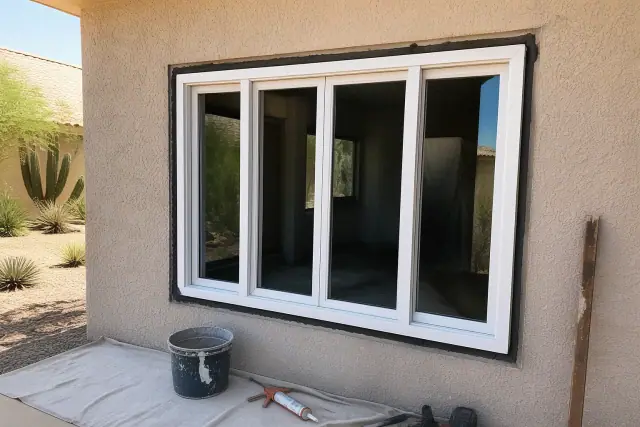
A cutaway of a reinforced vinyl frame with multiple internal chambers. This construction helps distinguish desert-ready PVC from thin, generic vinyl.
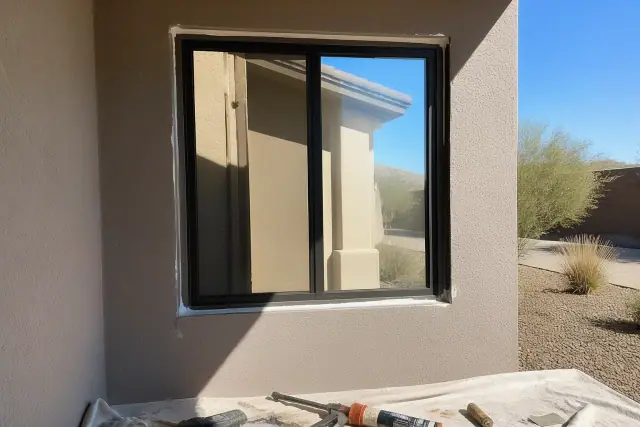
Direct afternoon sun striking a light frame and a dark frame on the same home. Exposure and color change how much heat the vinyl absorbs.
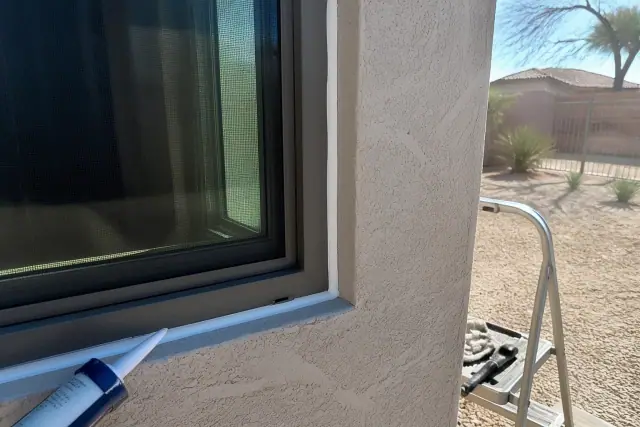
The frame set square and level with weather-rated flashing and sealant around a stucco opening. These details protect the opening from heat and monsoon rain.
Confirm that the PVC compound is UV-stabilized and the extrusion is reinforced and multi-chambered before comparing color, style, or price.
Dark vinyl absorbs more heat and expands more than white or light tan frames. That difference matters most on unshaded south- and west-facing elevations.
Chalking, discoloration, or brittleness within 5 to 7 years on an unshaded exposure can indicate vinyl that lacks adequate UV stabilization.
Avoid undersized frames, incomplete flashing, and sealants not rated for local UV exposure. A premium window installed poorly can underperform a correctly fitted midrange unit.
| Frame Option | Arizona Heat Considerations | Common Fit |
|---|---|---|
| Quality vinyl | Low heat transfer; choose UV-stabilized, reinforced construction. Typical Phoenix lifespan is 20 to 30 years. | Residential retrofits and standard-size openings. |
| Fiberglass | Conducts less heat than aluminum and pairs well with dual-pane Low-E glass and argon fill. | Homes where exposure, frame stability, and glass performance lead the decision. |
| Aluminum | Conducts more heat than vinyl or fiberglass; typical local lifespan is 25 to 40 years. | Commercial work, contemporary designs, and larger glass spans. |
Vinyl is a sound, cost-effective choice when the frame and glass package are matched to the home's exposure. Multi-chamber frames slow heat transfer, while dual-pane Low-E glass and argon fill reduce the solar load during peak July and August afternoons. Sliders have fewer moving hardware parts exposed to heat, casement and awning windows seal more tightly when closed, and fixed picture windows eliminate moving parts and weatherstripping. The best configuration depends on opening size, airflow, curb appeal, and sun direction-not the word vinyl by itself.
Exposure, frame color, opening size, and building type can make another material worth comparing. Fiberglass offers a lower-conductivity alternative, while aluminum can suit commercial properties and larger glass spans despite conducting more heat. Custom openings in historic districts such as Willo and Encanto-Palmcroft also require careful sizing rather than forcing a standard unit into the opening. For structural replacements, verify that the product meets the applicable AAMA/WDMA/CSA 101/I.S.2/A440 standard, Southern climate-zone energy criteria, and local permit requirements.
Will vinyl help with cooling? Dual-pane Low-E glass in a properly rated vinyl frame reduces solar heat gain compared with older single-pane or conductive aluminum windows, though the result depends on orientation, insulation, and existing window condition. How disruptive is replacement? A single window usually takes a few hours, while a full-home project typically takes one to three days depending on window count and stucco or trim repairs. Does fogged glass require a whole new frame? If the frame is sound, the insulated glass unit can often be replaced by itself, and failed seals, broken hardware, or damaged screens may also be repairable. Structural replacements in Phoenix or unincorporated Maricopa County generally require a permit, while an unchanged rough opening may qualify for a simpler process depending on the jurisdiction.
Share the window's exposure, frame condition, visible chalking or fogging, and the glass package you are considering. A local window specialist can compare materials, ratings, installation details, and repair options for the opening.